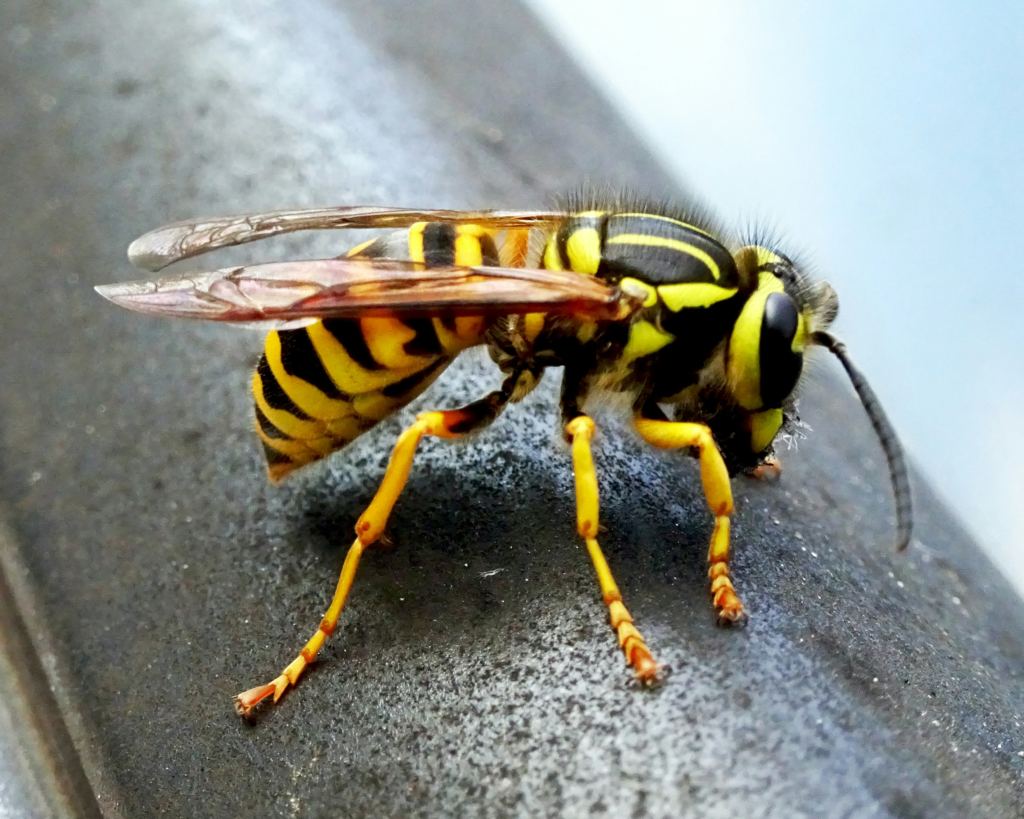
How To Tell The Difference Between Wasp, Bees, and Hornet | Kansas Identification Guide
Quick Answer
If you’ve ever spotted a flying insect around your home, you’re not alone in wondering whether it’s a bee, wasp, or hornet. While they may look similar at first glance, each behaves differently, builds different types of nests, and requires a different approach when it comes to removal.
Correct identification is important, not only for your safety, but also because some insects, such as honey bees, play a vital role in pollinating crops and flowers throughout Kansas.
Why Correct Identification Matters
At first glance, many stinging insects look remarkably similar. It’s common for homeowners to refer to nearly any black-and-yellow flying insect as a “bee,” when in reality it could be a honey bee, paper wasp, yellowjacket, bald-faced hornet, or another species entirely.
Correct identification is important because each insect behaves differently, builds different types of nests, and often requires a different approach to management. Some insects, such as honey bees and bumble bees, are valuable pollinators that play an essential role in our environment. Others, like yellowjackets and bald-faced hornets, can become highly defensive when their nests are disturbed and may require professional removal.
Misidentification can also lead to ineffective treatment. Spraying a ground nest as if it were a paper wasp nest, or attempting to remove a honey bee colony without understanding where it’s established, can make the problem worse while increasing the risk of being stung.
Before taking any action, it’s worth spending a few minutes identifying the insect you’re dealing with. Knowing the difference helps you choose the safest and most effective solution for both your family and the surrounding environment.
Quick Comparison Guide
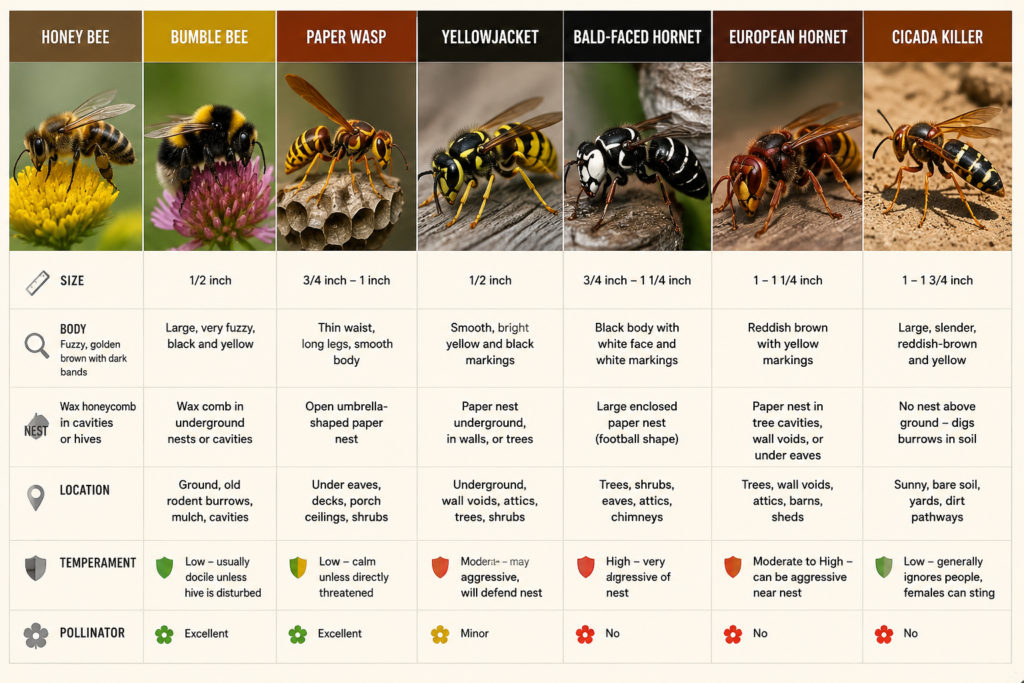
Use this comparison guide to quickly identify the most common stinging insects found throughout Kansas. While appearance is helpful, nest location and behavior are often the easiest ways to tell these insects apart.
Honey Bees
Honey bees are among the most beneficial insects found in Kansas. They spend their days collecting nectar and pollen, making them one of our most important pollinators. Unlike many wasps, honey bees are generally not interested in people or outdoor food and rarely sting unless they believe their hive is in danger.
If you discover a honey bee colony on your property, relocation is often a better option than extermination whenever it’s practical and safe to do so.
Bumble Bees
Bumble bees are larger and noticeably fuzzier than honey bees. They’re excellent pollinators and are commonly seen visiting flowers throughout the spring and summer. Although they can sting, they’re generally calm insects and usually become defensive only when their nest is threatened.
Many bumble bee nests are built underground in abandoned rodent burrows or other protected cavities.
Paper Wasps
Paper wasps are recognized by their slender bodies, long dangling legs, and distinctive umbrella-shaped paper nests. They’re commonly found beneath roof eaves, porch ceilings, decks, and outdoor structures.
Although paper wasps are less aggressive than yellowjackets, they’ll readily defend their nest if disturbed.
Yellowjackets
Yellowjackets are responsible for many of the stinging insect encounters homeowners experience each year. Unlike bees, they’re attracted to sugary drinks, food, garbage, and outdoor cookouts, making them frequent visitors to patios and picnics.
They commonly build nests underground or inside wall voids and can become extremely defensive if someone unknowingly approaches their colony. Because of their aggressive behavior, yellowjackets are often one of the most challenging stinging insects to remove safely.
Bald-Faced Hornets
Despite their name, bald-faced hornets aren’t true hornets. They’re actually a type of yellowjacket. They build large gray paper nests that resemble footballs and are commonly found hanging from trees, shrubs, or attached to homes.
These insects aggressively defend their nests and should never be disturbed without proper protective equipment.
European Hornets
European hornets are the largest true hornets commonly encountered in Kansas. Their reddish-brown heads and yellow markings often cause them to be mistaken for other large wasps.
Unlike many stinging insects, European hornets remain active after sunset and are sometimes attracted to outdoor lights.
Cicada Killers
Few insects create more concern than the cicada killer. Their impressive size alone is enough to alarm many homeowners, but appearances can be deceiving.
Cicada killers are generally non-aggressive toward people. Females can sting but rarely do unless handled, while males cannot sting at all. They’re solitary wasps that dig burrows in the ground and help control cicada populations.
Tips for Identifying Stinging Insects
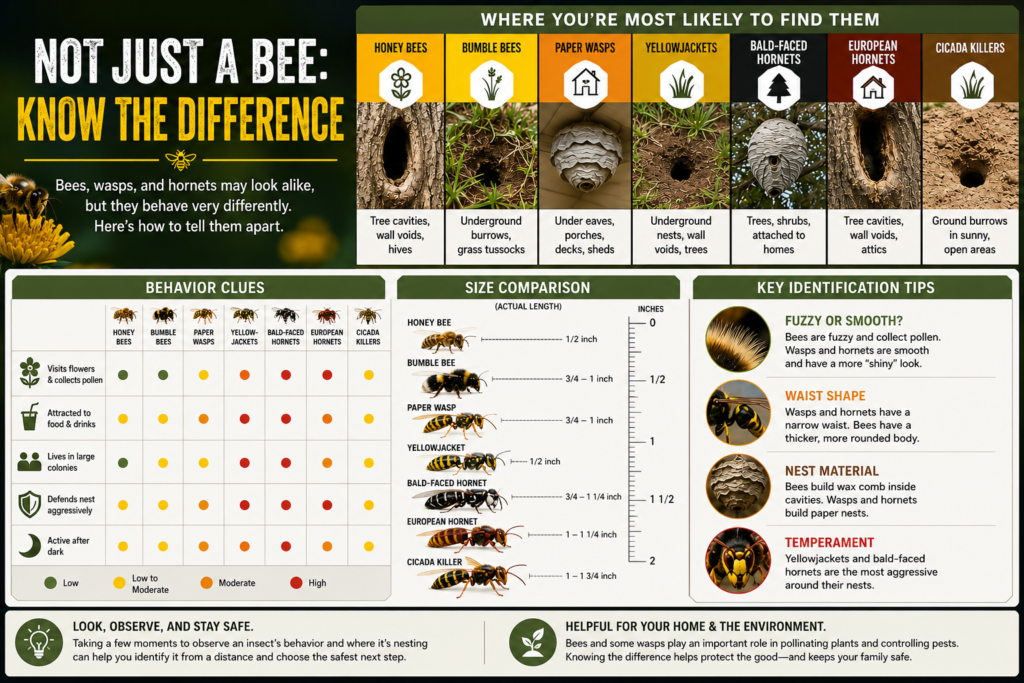
When trying to identify a stinging insect, pay attention to more than just its color.
Consider:
- Is the body fuzzy or smooth?
- Is it collecting pollen from flowers?
- Where is the nest located?
- Is it flying alone or with many others?
- Does it seem interested in flowers or your food?
Answering these questions can often narrow down the species before you ever get close to the nest.
What Should You Do If You Find a Nest?
If you discover a nest around your home, avoid disturbing it until you’ve identified the insect responsible. Some nests can safely remain undisturbed, while others may pose a greater risk to your family or pets.
Never attempt to seal, burn, or destroy an active nest. If you’re unsure what you’re dealing with, a professional inspection can help identify the species and recommend the safest solution.
Frequently Asked Questions
Are all bees aggressive?
No. Most bees are focused on collecting nectar and pollen and become defensive only when their hive or nest is threatened.
What’s the difference between a wasp and a hornet?
Hornets are a type of wasp. In Kansas, the bald-faced hornet is actually a species of yellowjacket despite its common name.
Which stinging insect is the most aggressive?
Yellowjackets and bald-faced hornets are generally considered the most defensive around their nests.
Should I remove every bee nest I find?
Not necessarily. Many bee colonies can safely remain undisturbed or be relocated by a local beekeeper, depending on where they’re established.
Why do yellowjackets keep flying around my food?
Unlike bees, yellowjackets actively search for sugary drinks, meat, and other human food sources, especially during late summer.
Final Thoughts
Bees, wasps, and hornets all play different roles in Kansas’ ecosystem, but they don’t all require the same response. Learning how to identify these insects can help you protect your family while avoiding unnecessary harm to beneficial pollinators.
If you’re ever unsure what you’ve found, it’s always safer to identify the insect first before attempting any type of removal.
Need Help Identifying a Stinging Insect?
Whether you’ve found a nest under your eaves, insects flying around your deck, or you’re simply not sure what you’re seeing, Pest Five-0 can help.
We provide professional inspections and stinging insect control throughout Central Kansas, helping homeowners safely identify and manage bees, wasps, hornets, and other nuisance insects.